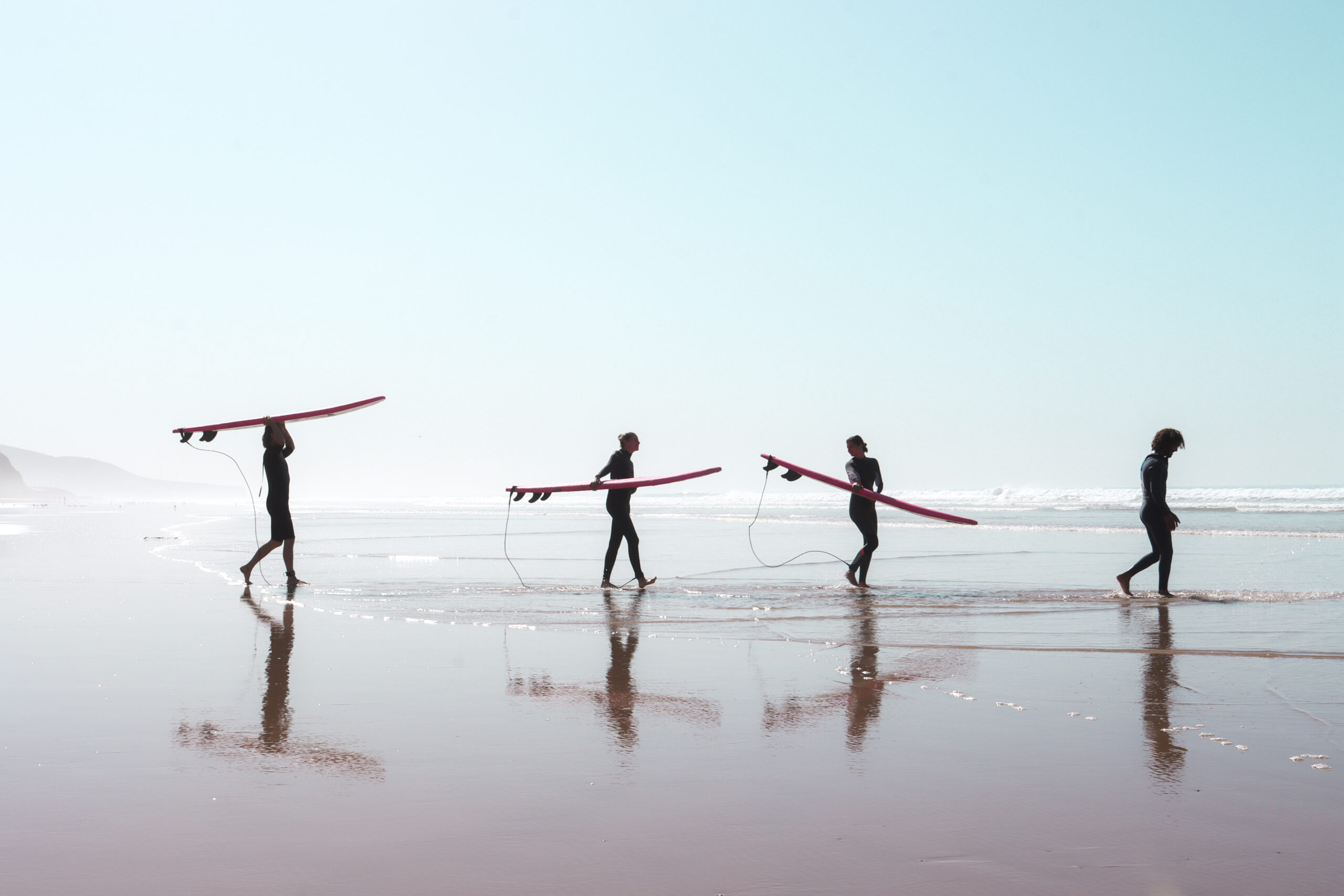
Morocco’s surf coast runs roughly 100km from Essaouira down to Agadir. Swells roll in from the North Atlantic and the season runs October through April, though with local knowledge, you’ll find rideable waves nearly year-round.
Here’s what you’ll find at each spot, along with the practical stuff: when to go, how to get around, what to pack and where to base yourself.
Best time to surf: seasons and conditions
Morocco sits directly in the path of North Atlantic winter storms, which is why the surf here is so consistent between October and April. Outside that window, you can still find waves, but they’re more wind-dependent.
October and November bring the first winter swells. The water’s still warm from summer, air temperatures are pleasant and the crowds have mostly gone home. It’s a great window for anyone who wants consistent surf without the busiest lineups.
December through February is the core of the season. Swells get bigger and more frequent, and this is when the points, Anchor Point especially, really show what they’re capable of. The air cools to the low-to-mid 20s during the day, but it rarely feels cold by European standards.
March and April ease back into spring conditions; consistent swells and lengthening days with a lighter feel to the coast.
May through September is the quieter period. Swell is smaller, less frequent and the wind picks up in the afternoons. Lots of camps lean more into yoga and wellness programming during these months. It’s still a perfectly good time to visit, just with different expectations.
Water temperature holds up well year-round. A 3/2mm wetsuit is enough for most of the season, and in summer you can often get away with a shorty or boardshorts. Air temperatures around Taghazout rarely drop below 18°C even in the depths of winter.
Surf spots in Morocco
Sidi Kaouki
Twenty-five minutes south of Essaouira, Sidi Kaouki is a wide, exposed beach break that works best when there’s a lot of swell. On a good day, it’s forgiving and fun.
Wind is a factor here; mornings are typically cleaner, and by early afternoon, the kite and windsurf crowd tends to take over.
Level: beginner to intermediate.
Best for: surfers who want a mellow, sandy-bottomed wave without the crowd pressure of Taghazout.
Safi
North of Essaouira, Safi has a heavy, sand-bottomed beach break with rocky slabs that produce powerful, tubular waves when the swell is up.
It’s an advanced wave, and worth checking conditions first before paddling out.
Level: advanced.
Best for: experienced surfers looking for something with punch and without a lineup.
Imsouane
Imsouane is where people fall in love with surfing in Morocco. The Bay is one of the longest right-handers on the continent; a slow, peeling wave that gives beginners and improvers time to think about what they’re doing on their feet.
There’s a second, punchier wave nearby at the harbour for those with more experience.
Level: beginner to intermediate (with a more advanced option close by).
Best for: anyone building confidence on longer rides, or families wanting a gentler introduction to surfing.
Taghazout and the surrounding breaks
Taghazout is the reason Morocco shows up on every surfer’s hit list. Here, you can surf a different break every day within a five-kilometre radius.
Anchor Point is the spot people travel here specifically for. It offers a long, powerful right-hander that, on a big swell, delivers long rides and barrel sections. It’s suited to intermediate-to-advanced surfers who can handle the speed and the rocks underneath.
Killer Point, just north, offers a similar sand-bottomed righthander with long rides when the swell cooperates.
For a step down in intensity, Boilers and Hash Point are consistent, fun peaks that intermediates get on well with, and where advanced surfers still find plenty to work with on smaller days.
Panoramas and La Source round out the point, each with its own character depending on swell direction.
Beginners aren’t left out. Banana Beach, right in the village, is a soft, sandy wave that’s ideal for first lessons, and it’s where most surf schools in Taghazout run their beginner groups.
We’re based right on this stretch. Our villa sits on the headland just north of Taghazout village, with Anchor Point, Boilers and Hash Point all within walking distance.
After nearly two decades coaching here, we know which break is working on any given morning, and which one to avoid.
Level: something for every level, concentrated in one small area.
Best for: anyone who wants variety without long drives between sessions.
Tamraght and Devil’s Rock
A few kilometres south of Taghazout, Tamraght is quieter and has become popular with families and first-timers.
Devil’s Rock (also called Imourane Beach) is a sandy-bottomed beach break with consistent, forgiving conditions, though it does draw a strong local crowd on its best days, and the lineup can get competitive.
If it’s too busy, Crocodile, Spiders and Anza are all close by as alternatives.
Level: beginner to intermediate.
Best for: those who want proximity to Taghazout with a slightly calmer pace.
Anza
Just north of Agadir, Anza is a beach break that works well for beginners and those wanting an easier paddle-out than the points further north.
It’s less scenic than Taghazout, but it’s a reliable option for less experienced surfers or when the bigger breaks are overpowered.
Level: beginner.
Best for: first-timers based nearer Agadir.
New to surfing? Where to start and what to expect
If you’re still learning, start at a beach break, not a point. Banana Beach, Anza and the calmer stretches around Tamraght are all sandy-bottomed, low-consequence spots.
Anchor Point and Killer Point are not the place to learn, as the takeoff is fast, and a crowded lineup of experienced surfers isn’t the environment you want for your first pop-up.
A few things make the biggest difference early on. Book lessons rather than just renting a board and figuring it out. An instructor will read the conditions for you, put you on the right sandbank or shoulder and correct your positioning to get the most out of your surfing experience.
Morning sessions tend to be less crowded than afternoons, which is usually the better window for beginners. Give yourself at least a week if you can. Most people go from wobbly white-water pop-ups to catching small green waves unassisted somewhere around day four or five, and that progress is a lot more visible with daily coached sessions.
Choosing a surf camp and where to stay
Morocco’s surf camps range from basic hostel-style setups to boutique villas, and what suits you depends on your budget, your level and how much structure you want.
We run a few different stays around Taghazout to cover both ends of that spectrum, with a surf-focused villa on the headland, a boutique hotel in the village with its own restaurant and bar, plus a quieter yoga-and-meditation villa a short drive north near Paradis Plage.
Local etiquette and the vibe in the water
Morocco’s lineups can get busy and are often dominated by strong local surfers, especially at the well-known points. Respect goes a long way here. Wait your turn, don’t snake for priority and share the waves when others are waiting.
Outside the water, the surf towns along this coast have a relaxed rhythm. You’ll find fishing boats, beachfront cafes and board shops. It’s a slower pace than a typical beach resort, and most surfers who come here end up spending as much time soaking up that atmosphere as they do surfing.
Beyond the surf
Surf trips here mean rest days with plenty to do. Taghazout and the surrounding area have loads on offer beyond the waves, from rooftop yoga sessions and day trips into the Souss Valley to Agadir’s markets and marina, just a short drive south.
We’ve put together a full guide to the best things to do in Taghazout if you want to fill in the days when the swell’s flat or you’re travelling with a non-surfer.
Arriving and getting around
Agadir–Al Massira Airport offers direct flights from several UK and European cities, and it’s roughly 25 to 40 minutes by road from Taghazout, depending on traffic.
A pre-arranged transfer is worth having in place for a late arrival. Every stay with us includes a transfer from Agadir Al Massira airport or the Agadir bus station as standard.
Once you’re here, taxis are cheap and easy to arrange point-to-point, and both Taghazout and Imsouane work well as a base since they put multiple breaks within a short drive or even a walk.
If you’re planning to move between zones, say a few days around Taghazout followed by a trip up to Imsouane, a hire car gives you more flexibility, though it’s not essential.
For most visitors, especially first-timers, a guided surf safari beats working it out solo. Conditions here change fast with swell direction, wind and tide, and knowing which of the dozen nearby breaks is firing on a given morning is the difference between a great session and a flat one. It’s exactly what our coaches do daily, taking guests to whichever break suits both the conditions and their level.
Surfing in Morocco FAQs
Do I need to bring my own board?
Not necessarily. Most camps and surf shops in Taghazout rent boards and wetsuits, including our own Almugar Surf Shop in the village, and it’s often easier to hire locally than to fly with one. If you have a board you’re attached to, most airlines carry them for a fee.
Is surfing in Morocco safe for beginners?
Yes, provided you stick to the right spots. Beach breaks like Banana Beach and Anza are low-consequence and well-suited to first-timers with proper instruction. The reef and point breaks further along the coast carry hazards, rocks, currents and crowded, experienced lineups, and aren’t the place to start.
What wetsuit thickness do I need?
A 3/2mm covers most of the season comfortably. In peak summer, you can often get away with a shorty or boardshorts, and in the coldest winter months, some surfers add boots for early mornings.
Is Morocco safe for solo and female travellers?
Taghazout and the surrounding surf towns are well set up for international visitors and generally feel relaxed, though the usual common-sense precautions apply, as they would when travelling anywhere. Staying somewhere with a positive reputation and asking your accommodation for guidance on areas and timings is the easiest way to feel comfortable.
Do I need a visa?
Most passport holders, including UK, EU and US citizens, don’t need a visa for short tourist stays in Morocco, though it’s worth checking current requirements for your specific passport before booking.
What’s the etiquette in crowded lineups?
Wait your turn, don’t paddle around someone already on a wave and don’t take more than your fair share when it’s busy. A friendly greeting goes a long way.
Surf packages at DFrost Almugar
Whichever break you end up chasing, this stretch of coast rewards a bit of local knowledge.
If you’d rather not spend your trip guessing which point is working, our surf packages are built around daily guidance from a team that’s been reading these waves since 2008.